
A good winter prep checklist for backyard gatherings starts with one honest question: will your patio still be safe and comfortable when the temperature drops below freezing? Cold changes everything outdoors, from how propane behaves to how quickly guests lose patience on a chilly deck. This guide walks through the gear, tasks, and timing that keep a winter patio usable, with practical notes drawn from how outdoor equipment actually behaves in cold weather. If you like comparing gear before you buy, browsing tool reviews guides can help you match products to the job.
Quick answer: Work through four phases — clear and inspect the space, protect water and power lines from freezing, add safe heat and lighting, and stock cold-weather comfort items. Prioritize anything involving electricity, gas, or ice first, because those present real safety risks. Test every heat source and cord before the first gathering, not during it.
Overview and specifications
This checklist is not a single product but a working system of tasks, gear categories, and timing rules. Treat it as a framework you adapt to your climate, patio size, and guest count. The specifications below describe what a well-prepared winter patio typically includes.
Comparison: three prep tiers
| Tier | Typical gear | Setup effort | Best for |
|---|---|---|---|
| Basic | Extension cords, outdoor rug, string lights, blankets | One afternoon | Mild winters, small gatherings |
| Standard | Patio heater, weighted furniture anchors, weatherproof covers, space blankets | One weekend | Regular cold-weather hosting |
| Full | Covered pergola, propane heater, hardwired lighting, windbreak panels | Several weekends | Deep freezes, frequent guests |
A basic setup suits regions where nights dip to around freezing but rarely below. The standard tier handles sustained cold and wind. A full build makes sense if you host weekly through winter and want the patio to feel like an extension of the house.
Key specs to plan around include the number of outdoor outlets and their amperage, the BTU output of any heater, the square footage you need to warm, and the wind exposure of your space. Write these numbers down before shopping. A patio heater rated for 200 square feet does little on an open, windy deck twice that size.
Key features
The features that matter most in a winter patio setup fall into safety, warmth, and protection.
Water and power protection
Freezing pipes and cracked hoses cause expensive damage. Shut off and drain outdoor spigots, disconnect hoses, and store them indoors. Use only outdoor-rated extension cords with a ground fault circuit interrupter (GFCI) outlet. Cold makes vinyl and rubber cords stiff and prone to cracking, so inspect each one for nicks before use.
Heat sources
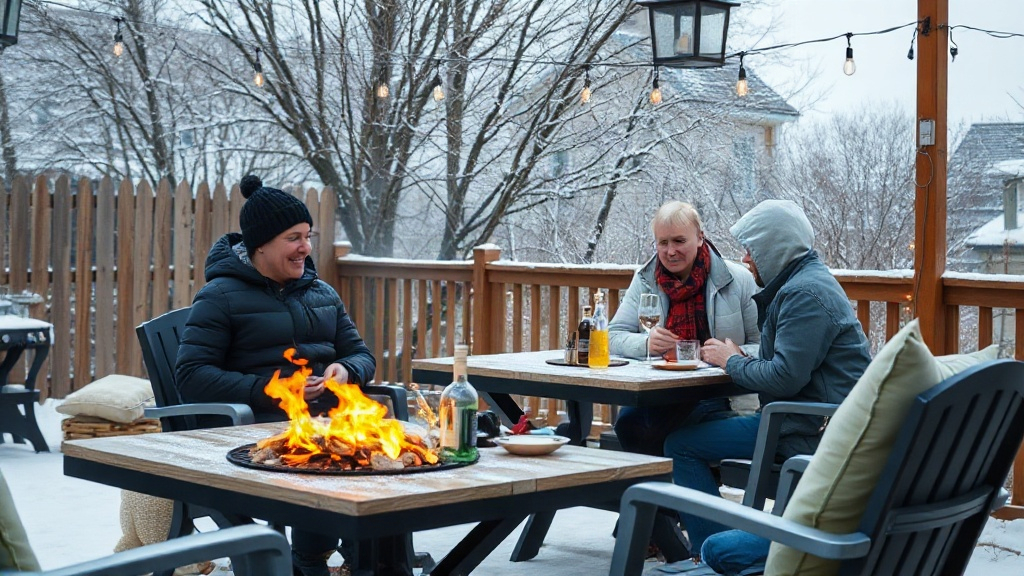
Choose heaters that match the space and ventilation. Electric patio heaters need dedicated circuits and dry connections. Propane and natural gas heaters produce carbon monoxide and belong outdoors or in well-ventilated covered areas only. Keep every heater at least three feet from furniture, fabric, and railings.
Furniture and surface protection
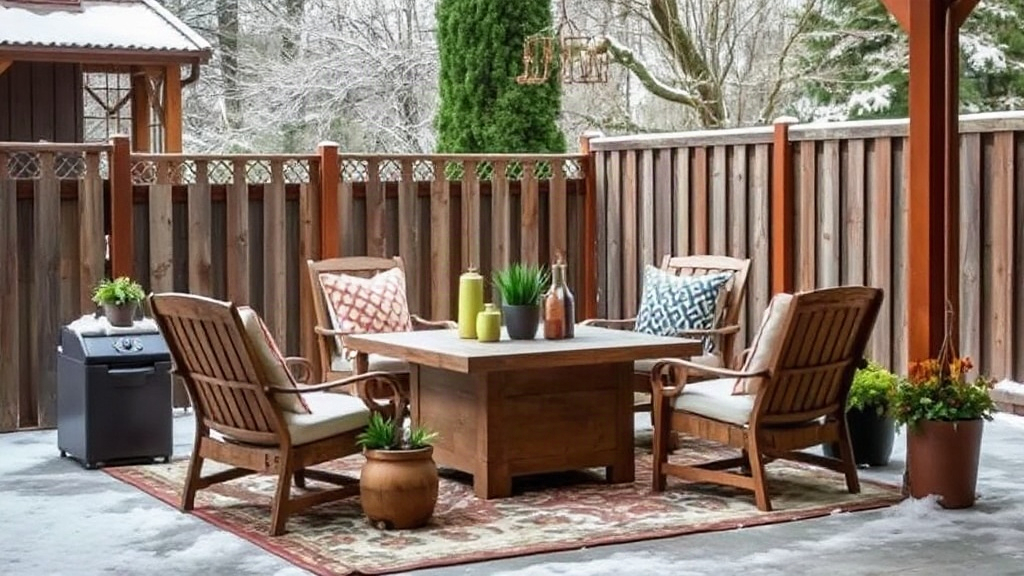
Weatherproof covers, weighted anchors, and a drainage-friendly outdoor rug extend the life of patio furniture. Wind is the quiet destroyer of winter setups: an unanchored umbrella or lightweight chair becomes a projectile. Move or secure anything that catches wind.
Lighting and comfort
Battery or plug-in string lights, motion-sensing path lights, and a few wool blankets make cold evenings bearable. Slip-resistant footwear and a cleared, de-iced walking path matter as much as any heater. For a full safety sweep, a reset propane tank safety valve procedure is worth knowing before you fire up a tank heater for the season.
Pros and cons
A structured winter prep routine pays off, but it has real costs and limits. Here is an honest look.
Pros
- Prevents the most common cold-weather failures: frozen pipes, tripped breakers, and tipped heaters.
- Extends patio use by weeks or months, which raises the value of furniture and hardscaping you already own.
- A written checklist cuts setup time for each gathering, since tasks repeat predictably.
- Safety steps like GFCI checks and heater clearance reduce genuine injury and fire risk.
Cons
- Quality heaters, covers, and hardwired lighting add up to real money.
- Propane and electric heat can be costly to run through a full winter.
- Some tasks, like draining lines or anchoring furniture, are tedious and easy to postpone.
- No checklist makes an open, windy patio comfortable in deep cold without a windbreak or cover.
Never run a propane or gas heater in an enclosed space, including a closed garage or a sealed tent. Outdoor heaters require ventilation, and a carbon monoxide detector near the patio door is a sensible backup.
The trade-offs favor people who host often. Occasional hosts can cover most needs with a basic tier and a borrowed heater.
Performance in practice
In real use, the checklist succeeds or fails on timing and sequence. Start roughly four weeks before your first planned gathering. Begin with safety items, then move to comfort.
Week one: inspect outlets, cords, and heaters; drain and store hoses; clear gutters and drains. Week two: anchor furniture, install covers, and set up lighting. Week three: test heat output on a cold evening and note whether one heater warms the seating zone. Week four: stock blankets, check the walking path for ice, and confirm your guest seating fits within the warmed area.
A common mistake is buying a heater before measuring the space. A single patio heater typically warms a small cluster of seats, not a whole deck. Position it so the heat reaches people, not open air, and use a windbreak to keep warmth from blowing away.
Cold also affects small things. Batteries in lights and remotes weaken faster, so keep spares indoors. Gas grills may light more slowly in cold, and propane tanks lose pressure as temperatures drop. Plan cooking around those limits and keep a backup method ready.
Run your full setup once on a genuinely cold evening before guests arrive. You will spot weak lighting, uneven heat, and icy patches while you still have time to fix them.
Who is winter prep checklist for backyard gatherings for?
This checklist suits anyone who wants to keep using an outdoor space through the colder months, and a few groups benefit most.
- Frequent hosts who entertain on a patio or deck through fall and winter.
- Homeowners in cold climates who need to protect pipes, furniture, and hardscaping from freeze damage.
- Renters with small patios who want portable, non-permanent heating and lighting.
- People planning a single event, such as a holiday gathering, who need a condensed version of the routine.
It is less useful for those who close their patio entirely in winter or live in mild climates where frost is rare. Those readers can skip most of the freeze-protection steps and focus on lighting and comfort.
The gear side matters too. Buyers who compare heaters, cords, and covers before purchasing tend to avoid mismatched output and undersized circuits. A short buying review saves more than it costs in returns.
Match heater output to the area you actually heat, not the full patio. Most gatherings concentrate people in a small zone, so warming that zone well beats heating a large space poorly.
FAQ
How far ahead should I start winter prep?
Begin about four weeks before your first cold-weather gathering. Safety checks and freeze protection come first, followed by heat and lighting setup, then a full test run on a cold evening.
What is the biggest mistake people make?
Buying a heater without measuring the space or checking the circuit. A heater that exceeds the outlet’s amperage trips breakers, and one that is too small leaves guests cold.
Is a propane patio heater safe on a covered porch?
Only with good ventilation and clearances from walls, ceilings, and fabric. Gas heaters produce carbon monoxide, so never use one in a sealed or fully enclosed area.
How much does a basic winter patio setup cost?
Costs vary widely by region and product choice. A basic setup of cords, lights, blankets, and a rug is modest; adding a heater, covers, and windbreak panels raises the total significantly.
Can I leave patio heaters and lights out all winter?
Electric and gas heaters should be covered or stored when not in use. Lights rated for outdoor use can stay up, but check cords and connections after storms or hard freezes.
Conclusion and verdict
A winter prep checklist for backyard gatherings works best as a four-week, safety-first routine. Protect water and power, secure furniture against wind, match heat output to the space you actually use, and test everything on a cold night. The verdict is straightforward: the safety steps are non-negotiable, while the comfort upgrades are worth it mainly for people who host often. Start this weekend by inspecting your cords, outlets, and heater clearance, then build the rest of the plan around your first gathering date.